
Aviation Document Management: Technical Library, Records and Regulatory Compliance
- Aviation Blog
- November 25, 2026
- Ejmiral
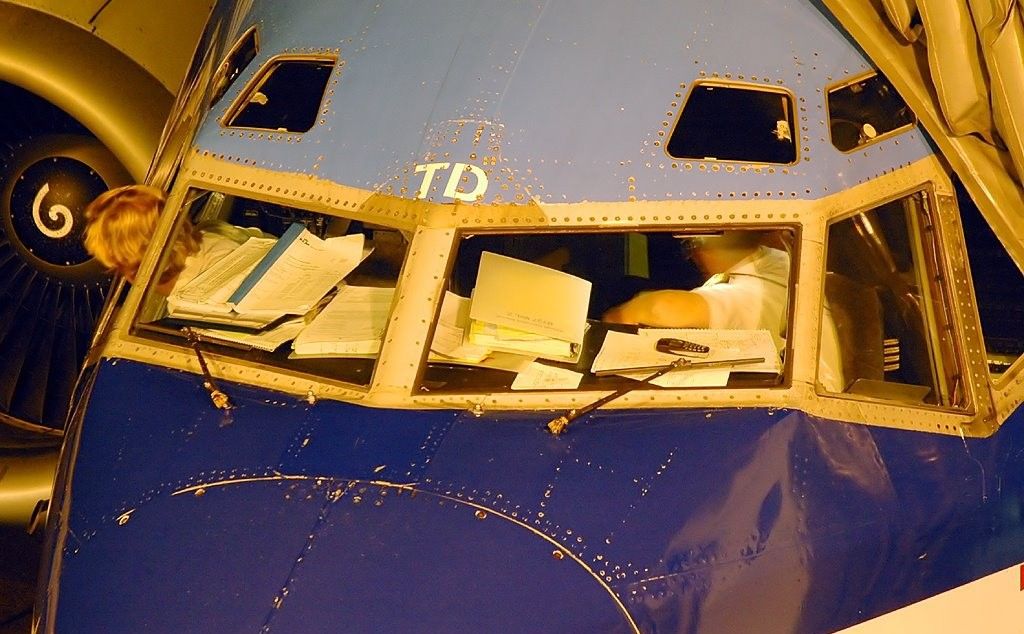
Few industries run on paper – or its digital equivalent – the way aviation does. Operations manuals, the minimum equipment list, NOTAMs, notices to crew, safety bulletins, training records, licences, maintenance records and hundreds of forms all have to be correct, current and in the right hands at the right moment.
For an airline, document management is not an administrative convenience. It is a regulatory obligation and a safety control in its own right: a pilot working from a superseded procedure, a missing training record or an expired licence can ground an aircraft, fail an audit or contribute to an incident. That is why every well-run operator treats its technical library – the controlled collection of manuals, procedures, forms and records – as part of its safety system.
Why regulators care about documents
Aviation rules are written around a simple idea: everyone who performs a safety-related task must have the current approved instructions, and the operator must be able to prove what was done, by whom and when. That is why document control and record keeping appear throughout international and national regulations.
- ICAO Annex 6 requires operators to provide an operations manual for the use and guidance of operations personnel, to keep it up to date, and to make sure crew have the information they need for each flight.
- EASA Air Operations rules require the operations manual to be kept current, with amendments distributed to all personnel concerned, and a record-keeping system that gives reliable traceability of activities. Records must be stored so that they are protected from damage, alteration and theft, and kept for the periods the rules set.
- FAA 14 CFR Part 121 similarly requires manuals to be kept current and made available to the personnel who use them, and requires airlines to keep crew, training and maintenance records.
- Safety Management Systems (ICAO Annex 19) depend on documentation and safety communication – policies, procedures, hazard reports and lessons learned only work if people actually receive and read them.
- Audits such as IOSA and regulator inspections test document control directly: inspectors ask for the current revision, the distribution list and evidence that staff were informed.
The exact requirements and retention periods differ between authorities and record types, so every operator has to map its own obligations – but the pattern is the same everywhere: controlled content, controlled distribution, and evidence.
Where email and shared drives fall short
- Version confusion. Several copies of the same manual circulate, and nobody is sure which revision is current.
- No proof of receipt. An email does not show that a captain actually read a new procedure before the next flight.
- Missed expiries. Licences, medicals, training and documents with review dates slip past because the reminder lives in someone’s calendar.
- Lost records. Records scattered across inboxes and folders are hard to retrieve when an auditor or investigator asks for them.
- Crew without connectivity. Crew down-route or on board cannot rely on a network connection to open the latest version.
The building blocks of good document control
- One controlled technical library for manuals, circulars, notices, forms and policies, organised by category – the single source of truth for everyone.
- Version and revision control – every change is a new version, the current one is unmistakable, and older versions stay available for the record.
- Targeted distribution to the people who need each document – by role, fleet, base or department.
- Read-and-acknowledge evidence – a clear trail of who downloaded and viewed each document, and when.
- Review and expiry cycles so documents are reviewed on schedule and nothing expires unnoticed.
- Secure retention and fast retrieval of records for audits, investigations and regulatory requests.
- Access everywhere – office, crew room, tablet and on board, including offline.
How AEROST Documentation Management helps
The AEROST Documentation Management module turns these controls into one digital technical library. Documents are created and managed online by category – circulars, forms, general documents, joint notices to crew, manuals, NOTAMs, notices to pilots, policies, procedures, safety and security, training, and warnings and alerts – or existing files are uploaded and published.
Every document is distributed with version management, so staff always see the current revision while earlier versions remain on record. The system tracks who downloaded and viewed each document, which gives the airline the evidence auditors ask for, and it manages document expiry and review frequencies so reviews happen on time.
For crew, the AEROPUT app on Android and iOS puts the technical library, on-board documents and document review in their hands – it works without internet connectivity, so the latest approved material is available on the ramp, down-route and in the flight deck. And because documentation sits on the same platform as crew scheduling, training records, safety reporting and operations, information does not have to be copied between systems.
Getting started
- Build your technical library: list your controlled documents and the regulations that apply to each – including retention periods.
- Agree owners, approval steps and review frequencies for every document type.
- Define distribution groups by role, fleet and base.
- Move to read-and-acknowledge for safety-critical changes, and monitor who has not yet read them.
- Check retrieval: can you produce any record, and its history, within minutes when an auditor asks?
Want to see how AEROST Documentation Management and the AEROPUT app would fit your operation? Request a demo and our team will set it up around your documents and workflows.
Ready to modernise your airline systems?
Talk to our team about a demo of AEROST, AEROPAX and AEROPUT, set up around your airline’s operation.